
Celebrating first responders: A look at Fortem’s Thank a First Responder Day 2026
Fortem Australia has launched the first stage of its dedicated disaster resilience toolkit, expanding its mental health literacy resource hub to better support emergency services workers, their families, and communities impacted by disasters and critical events.
The new toolkit brings together practical, evidence-based resources into a centralised, one-stop platform designed specifically for the unique pressures faced by police, fire, ambulance, SES and other frontline personnel, as well as their families who support them at home.
‘Education and preparedness sit at the heart of everything we do,’ said Fortem Australia CEO Mick Willing APM. ‘By strengthening mental health literacy, reducing stigma and improving access to support, the disaster resilience toolkit is another way Fortem helps emergency services workers and their families build resilience before, during and after disaster events.’
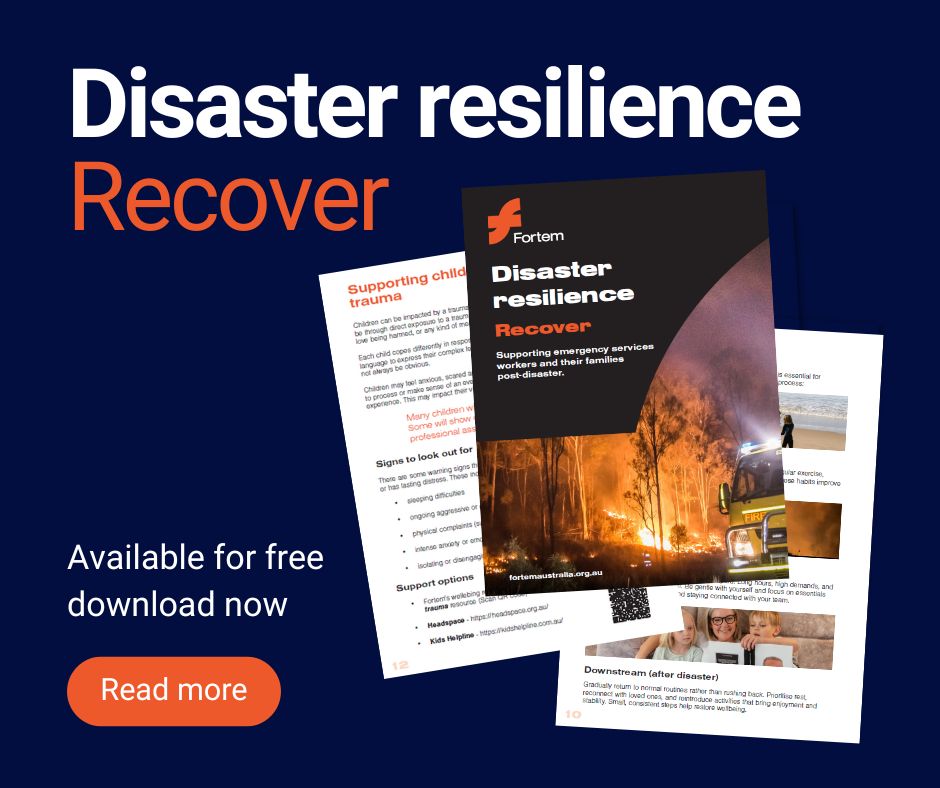
As part of the initial rollout, Fortem has released Disaster resilience: recover, a practical A5 resource available in digital and printed formats to support accessibility and ease of use. The booklet provides practical guidance to help individuals understand emotional, physical, and psychological impacts of disaster and critical incidents, and outlines pathways to support services challenges.
The resource is available for free download via Fortem’s website, with printed copies distributed through Fortem-led social connection activities and agency engagements. First responder agencies and community organisations can also order printed copies directly through the website.
The toolkit also introduces a new disaster resilience directory, a dedicated web page that compiles links to state, territory and local government disaster resilience, emergency management and recovery information in one central, easy-to-navigate hub.
‘During disasters, families need clear, reliable information they can trust,’ said Mr Willing. ‘Emergency services workers are often deployed across the country or required to move at short notice, which can leave families navigating unfamiliar systems while supporting loved ones on the frontline.’
By centralising resources in one place, the directory reduces confusion and stress, helping families quickly find clear, trusted information so they can better understand available services, recovery processes and local assistance.
Local governments are invited to submit their disaster webpages for inclusion, strengthening local relevance while maintaining national accessibility and consistency.
Additional features include a new disaster-specific resources page and the recently launched Aftermath: rebuilding strength, restoring hope, which has already been downloaded hundreds of times since its release on 6 January.
Future updates to the resource hub will include additional resources as well as a service locator tool, enabling users to identify additional support services in their area.
The launch aligns with Fortem’s strategic commitment to expanding engagement in regional, rural and remote locations, ensuring support is accessible regardless of postcode.
You can explore the full toolkit and access resources via: Home – Fortem Australia